Off-centre culet and table: what a symmetry grade covers
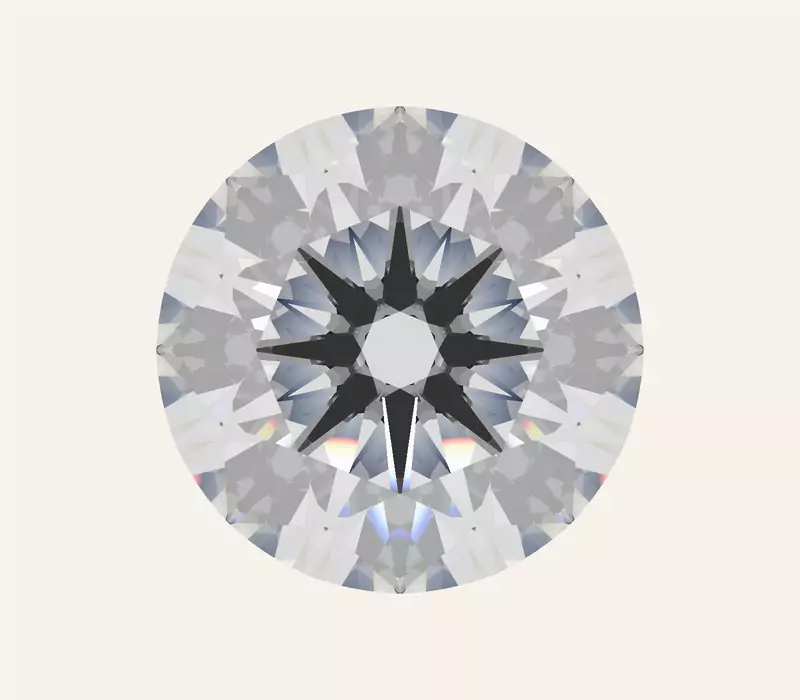
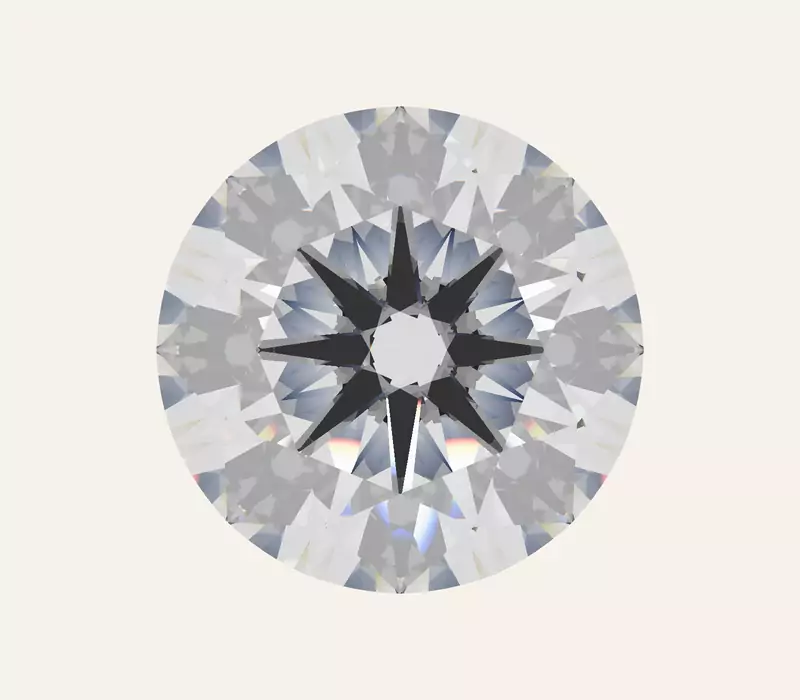
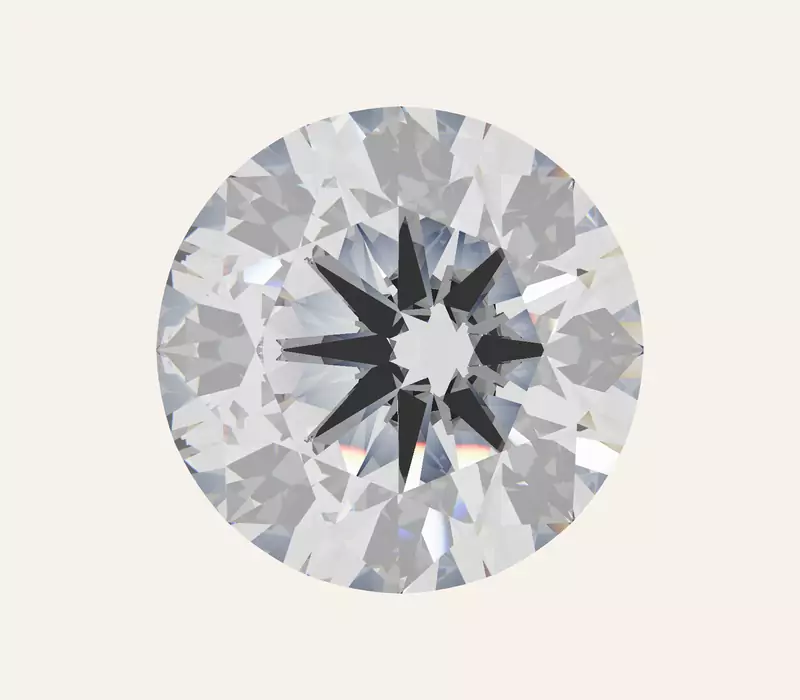
Symmetry is the exactness of a diamond's outline and of the shape, placement and alignment of its facets. GIA grades it from Excellent to Poor, and an off-centre culet or table is among the features that can lower it; GIA abbreviates them C/oc and T/oc. In this model, a round with its culet 4% of the diameter off the middle shows a lopsided pattern face up, and the same round with its culet centred does not.
Written by Carat Hunter, an independent diamond price comparison site that does not sell diamonds. Last checked against its sources on .
What does a symmetry grade cover?
GIA grades symmetry on the presence and visibility of symmetry deviations at 10x magnification. Features that lower it include, among others, an off-centre culet, an off-centre table and an outline that is out of round.
A report's plot does not show details of finish, so it will not show where the culet or table sits. The symmetry grade is the report's summary of them.
What do C/oc and T/oc mean?
They are GIA's abbreviations for two symmetry features:
- C/oc
- Culet off-centre: a deviation of the culet from the central position on the pavilion.
- T/oc
- Table off-centre: a deviation of the table from the central position on the crown.
GIA's list of symmetry terms has others too, such as OR for out-of-round.
What does an off-centre culet look like?
The same round three times: centred, and with its culet moved off the middle by a small and a large amount. In this model, the dark pattern seen face up turns lopsided as the culet moves. In GIA's description of Very Good symmetry, typical features include a slight off-centre table or culet, seen face up at 10x magnification; the offsets here are drawn larger to show the effect.
 Drag to turn
 Drag to turn
 Drag to turn
What differs, in these models
Centred
- Culet positioncentredGood: Centred in this model
Culet slightly off centre
- Culet position0.07 mm off the middleWatch: An off-centre culet is one of the features that lower symmetry
Culet well off centre
- Culet position0.26 mm off the middleWatch: An off-centre culet is one of the features that lower symmetry
Good and Watch mark whether a figure is inside or outside a range GIA or IGI publishes; where no range applies, the note describes the model only.
Drag any stone; all three turn together.
Modelled illustrations from one stone's measurements, not listings.
What does an off-centre table look like?
The same round with its table moved off the middle instead, by a small and a large amount. In this model the crown facets on one side grow and those on the other shrink.
Drag to turn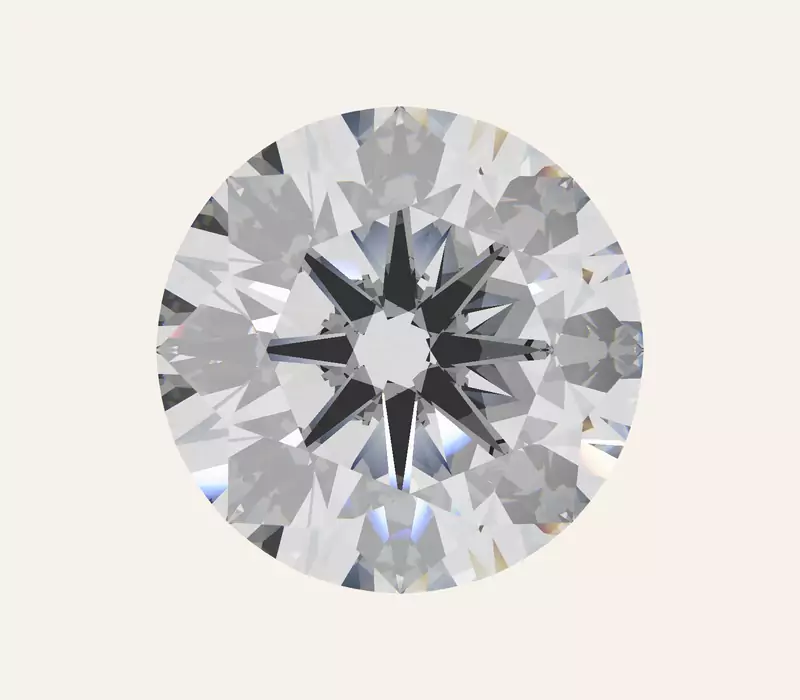 Drag to turn
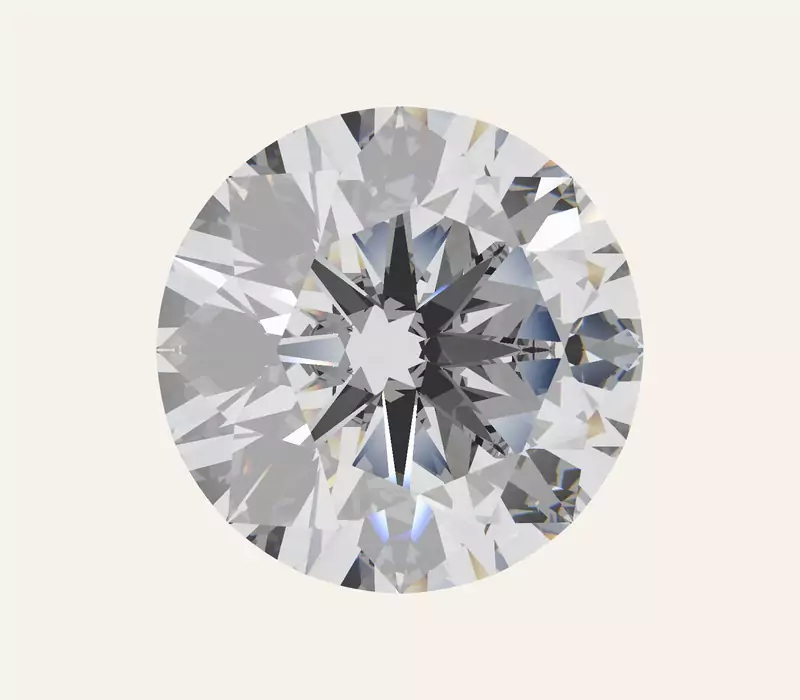 Drag to turn
What differs, in these models
Centred
- Table positioncentredGood: Centred in this model
Table slightly off centre
- Table position0.13 mm off the middleWatch: An off-centre table is one of the features that lower symmetry
Table well off centre
- Table position0.26 mm off the middleWatch: An off-centre table is one of the features that lower symmetry
Good and Watch mark whether a figure is inside or outside a range GIA or IGI publishes; where no range applies, the note describes the model only.
Drag any stone; all three turn together.
Modelled illustrations from one stone's measurements, not listings.
What to check on a listing
- Read the symmetry grade. It sums up details such as an off-centre culet or table that the plot does not show.
- Watch the video face up. GIA's guide to ovals says the two halves of a stone should mirror each other and the culet should be dead centre, and for a round the facets should be arranged evenly round the middle. A pattern that bunches to one side is worth a closer look.
- Look at the culet. If the culet is large enough to see face up, you can see whether it sits in the middle.
Related: How to read a diamond report, A large culet
On Carat Hunter
A stone's page shows the report's symmetry grade next to its polish and cut grades, where the report gives them, and Lucy's take on the stone says when its polish or symmetry is below Excellent. Neither names the feature behind a lower grade, so the video is where to look.