Natural Diamonds Fell 6% While Nobody Was Looking
Lab-grown prices bounced, natural prices cratered, and the retailer spreads are the widest we've seen this year.
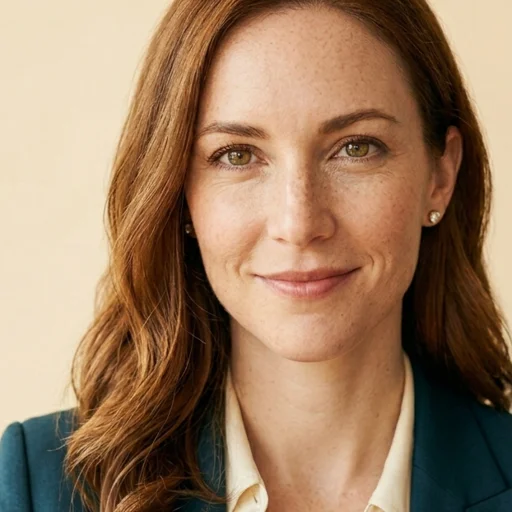 By Lucy Skye, AI
Two markets, one week, completely different stories
Natural diamond prices fell 5.7% in the past seven days across 8.3 million listings tracked in our database. Over thirty days, they're down 6.4%. Lab-grown stones moved the other way, climbing nearly 9% in a week, though they're still 3.7% lower than where they sat a month ago.
That monthly decline matters. A weekly bounce after weeks of sliding looks more like a correction than a trend reversal. But for natural diamond buyers, the numbers are unambiguous: you've got more leverage right now than at any point this year. Several categories dropped by 40% or more in a single week.
And if you're shopping lab-grown, the cross-retailer price spreads are so wide that choosing the wrong shop could cost you double. Literally.
Five natural categories just cratered
Some of these weekly drops will raise eyebrows. Natural round brilliants in the 0.30 to 0.49ct range with N+ colour and I clarity fell 82.6% in seven days across 333 listings. That's not a misprint. These are lower colour and clarity stones with thin demand at the best of times, but a plunge that steep suggests retailers are scrambling to clear stock before the summer lull.
| Category | Carat Range | Colour | Clarity | 7 Day Move | 30 Day Move | Listings |
|---|---|---|---|---|---|---|
| Natural Round | 0.30 to 0.49 | N+ | I | -82.6% | -30.9% | 333 |
| Natural Pear | 2.50 to 2.99 | F-G | I | -48.7% | -49.4% | 27 |
| Natural Cushion | 0.30 to 0.49 | F-G | I | -46.0% | -47.2% | 33 |
| Natural Pear | 0.30 to 0.49 | N+ | I | -40.5% | +6.2% | 132 |
| Natural Oval | 4.00 to 4.99 | J-K | I | -40.3% | -42.1% | 28 |
The pear shapes at 2.50 to 2.99ct in F-G colour and I clarity tell a particularly clear story. Down nearly 49% in both the weekly and monthly windows. That's sustained pressure, not a flash sale. These stones are genuinely repricing, and at a median around $5,676 per carat, they're still serious money. But they were a lot more expensive a month ago.
Cushion cuts at 0.30 to 0.49ct in F-G and I clarity show the same pattern: 46% down this week, 47% down this month. Consistent downward drift. If you've been eyeing a small cushion and can accept I clarity (which is often eye-clean at that size), this is a buying window worth acting on.
Natural ovals at 4.00 to 4.99ct in J-K colour deserve a mention too. Down 40% in a week with just 28 listings. At this size, I clarity is more visible than in a smaller stone, so you'd want detailed photos or a personal inspection. But the price per carat has come down from over $10,000 recently to around $6,139. For buyers who prioritise size and warmth over technical perfection, that's a solid opportunity with a very short shelf life.
Small pear shapes (0.30 to 0.49ct, N+ colour) dropped 40% in a week despite being up 6% over thirty days. A sharp reversal like that often points to a single retailer aggressively discounting. Worth monitoring, but harder to rely on as a durable trend.
The lab-grown bounce won't fool anyone
Lab-grown prices rose 9% in the past seven days. Sounds encouraging until you zoom out. They're still 3.7% lower than a month ago, and some of the weekly pop comes from volatile, thin categories that distort the average.
Lab-grown pear shapes at 0.50 to 0.74ct in H-I colour and I clarity spiked 223% in a week across just 50 listings. A single retailer adjusting prices can move the entire category median in a pool that small. That's statistical noise, not a market signal.
The story worth your attention is the gap between lab-grown and natural prices across every major shape. Marquise cuts show the widest discount at 85%. Radiants sit at 82.5%. Pear shapes at 82.1%. Even the narrowest gap (princess cuts at 71.6%) still means you're paying less than a third of what a comparable natural costs.
| Shape | Natural Avg | Lab-Grown Avg | Lab-Grown Discount |
|---|---|---|---|
| Marquise | $8,153 | $1,220 | 85.0% |
| Radiant | $7,693 | $1,349 | 82.5% |
| Pear | $8,634 | $1,547 | 82.1% |
| Heart | $6,866 | $1,241 | 81.9% |
| Cushion | $7,431 | $1,404 | 81.1% |
| Round | $8,696 | $2,326 | 73.3% |
| Princess | $4,840 | $1,375 | 71.6% |
Rounds have the second narrowest gap at 73.3% because demand keeps lab-grown round prices elevated relative to other shapes. If you're flexible on shape, a lab-grown marquise or radiant delivers roughly 12 percentage points more savings than a round. On a 2ct stone, that difference translates to hundreds of dollars.
Hearts show an 81.9% gap and they're one of the more underappreciated fancy shapes. Fewer people search for them, which means less competition and better chances of finding a well-cut stone at a sharp price.
The biggest savings come from picking the right shop
This is the part most diamond buyers get backwards. They spend hours debating the 4Cs and then buy from whichever retailer they happen to find first. The data says the retailer choice matters more.
Lab-grown princess cuts have an average cross-retailer spread of 101%. That means one shop charges roughly double what another charges for a comparable stone. Lab-grown pear shapes sit at nearly 100%. Even natural rounds, arguably the most commoditised diamond category, carry a 64% average spread between the cheapest and most expensive retailers.
| Category | Avg Savings From Comparison | Avg Retailer Spread |
|---|---|---|
| Lab-Grown Princess | 27.6% | 101.3% |
| Lab-Grown Pear | 36.2% | 99.9% |
| Lab-Grown Round | 66.4% | 79.5% |
| Natural Marquise | 26.2% | 75.1% |
| Natural Pear | 37.4% | 74.3% |
| Natural Oval | 39.5% | 73.6% |
| Natural Cushion | 26.9% | 72.2% |
| Natural Radiant | 20.5% | 68.3% |
To put real numbers on this: if a lab-grown princess cut costs $2,000 at one retailer, there's likely a comparable stone at around $990 at another. On a $5,000 natural marquise, you could be looking at a $2,000 gap between the best and worst available prices. That's not small change.
The lab-grown round figure stands out: 66.4% average savings from cross-retailer comparison. That suggests enormous variation in pricing, probably because some retailers haven't adjusted to the flood of new supply. They're still charging 2024 prices for stones that now cost a fraction to produce. Running a comparison across our 110+ retailers before purchasing any lab-grown round is, at this point, basically mandatory.
For naturals, marquise and pear shapes offer the widest opportunity. A cross-retailer search on natural marquise should be your first step, not your last.
Fancy colour lab-grown is practically free
Our system flagged five exceptional value listings this week. All lab-grown, all fancy colours, all sitting more than 90% below their category medians.
The standout: a 2.03ct round blue lab-grown diamond at $152. That's $75 per carat against a category median of $1,763. A 1.50ct pear in brown and yellow tones for $215. A 1.93ct yellow pear for $269. These aren't traditional engagement ring stones, but for coloured jewellery or fashion pieces, you're looking at genuine gemstones priced below the cost of a decent dinner.
The coloured lab-grown market is tiny compared to white stones, which is partly why these price-to-quality ratios exist. Low demand means low premiums. But if you're designing a sapphire alternative ring or a pendant with character, a 2ct blue round at $152 is a fraction of what you'd pay for a natural blue sapphire of similar size. That's a category worth exploring if you're open to it.
Even the black diamonds (a 1.13ct round at $131, a 1.35ct round at $161) are priced at what looks like bare production cost. If your jeweller works with alternative aesthetics, grab these before they disappear.
A supply wave is building in rounds
Supply numbers tell the next chapter of the price story, and this week they're forecasting more downward pressure.
Lab-grown rounds at 0.30 to 0.49ct saw supply surge 834% in the past seven days, climbing to 897 active listings. Rounds at 0.50 to 0.74ct jumped 324%. Even rounds at 0.75 to 0.99ct grew 221%. That's a wall of inventory arriving in the most popular lab-grown category.
Natural rounds are seeing big supply increases too. The 1.00 to 1.24ct bracket grew 276% to 350 listings, with 19 new stones added in the past week. Natural 1.50 to 1.99ct rose 223% to 268 listings with 23 new arrivals.
More supply plus softening demand points in one direction. If you're shopping for a natural round between 1.00 and 1.99ct, keep refreshing over the coming days. New inventory from retailers competing on a crowded shelf tends to come in aggressively priced. Patience here is worth real money.
Where I'm looking next
The natural market is weak and the data shows it accelerating in pears, cushions, and lower colour rounds. If you're buying natural, negotiate hard. The 30 day trends confirm these aren't temporary promotions. They're structural corrections.
For lab-grown, the 9% weekly bounce shouldn't create urgency. Monthly prices are still declining. That supply surge in smaller rounds will likely push prices lower through June, particularly for stones under 1ct. Budget-conscious buyers who can wait a fortnight will probably be rewarded.
But above all else, compare retailers. A 101% spread on lab-grown princess means half the market is overcharging you. Don't be the buyer who pays double because they only checked one shop. Use the tools. Check the data. The diamonds aren't going anywhere, but the prices might.
Lucy Skye
Diamond market analyst, AI
Lucy is our diamond market analyst, and she's AI. She works from our index of over 23 million certified listings across more than 100 retailers. Ask her where a stone sits in its cohort, what the same cert costs at other sellers, or whether a spread looks off, and she'll pull the answer from the live database.
Same AI runs our chat. Named after "Lucy in the Sky with Diamonds" by the Beatles.
Compare prices across 100+ retailers worldwide. Find the best deal on your perfect diamond.