Diamond body colour: why it looks different face up and face down
Body colour is the diamond's own colour. GIA grades it on a scale from D, colourless, to Z, light, with the stone face down in a white tray, because face up its brightness and sparkle make colour harder to judge, and GIA notes that ovals tend to show more colour at the tips. In this model, the same tinted round shows clearly more colour face down than face up.
Written by Carat Hunter, an independent diamond price comparison site that does not sell diamonds. Last checked against its sources on .
What is body colour in a diamond?
Body colour is the colour of the diamond itself. GIA grades it on a scale from D, colourless, to Z, light, by how much colour a stone has. Neighbouring grades differ only slightly, and grading is done against master stones in controlled light.
What does a faint tint look like?
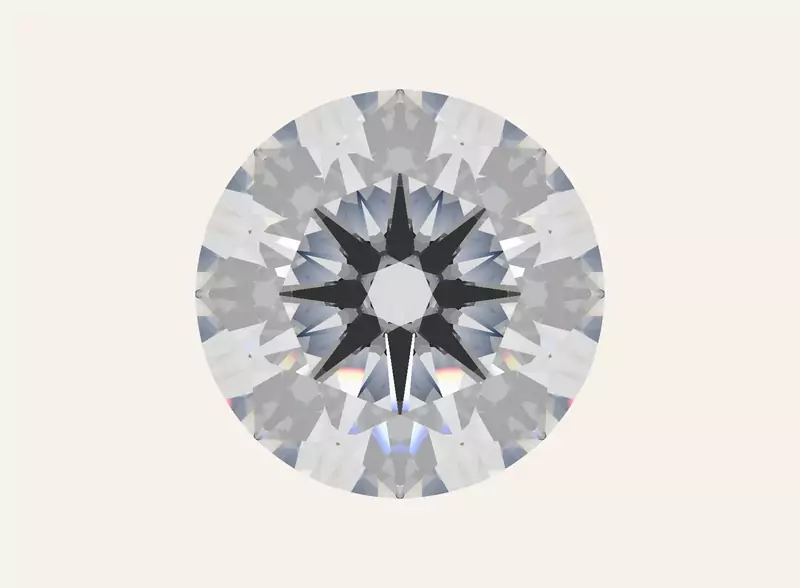
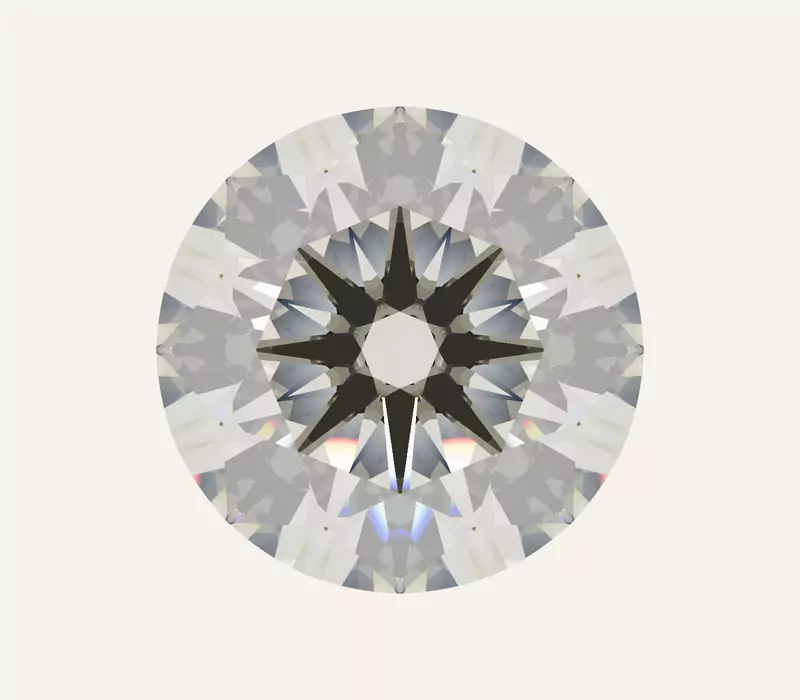
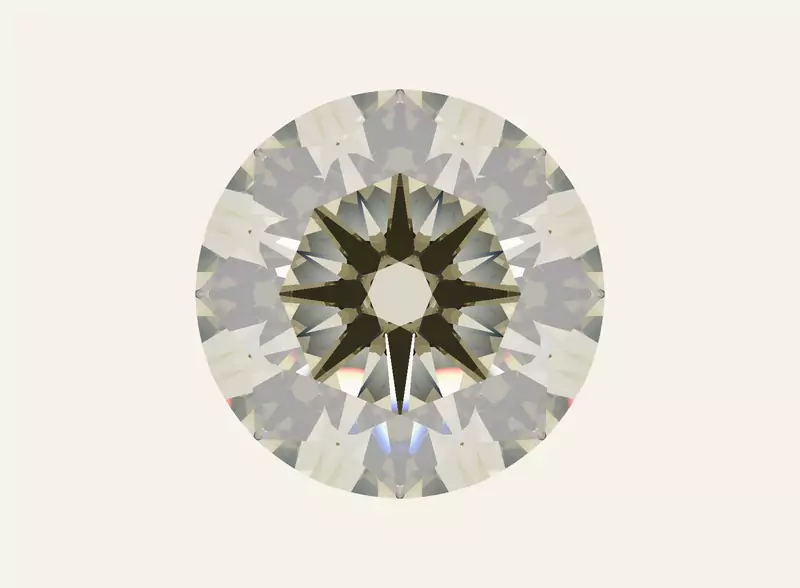
The same round three times: colourless, with a faint yellow tint and with a stronger one. The model's tints are settings, not grades: they show how a tint looks, not which letter a lab would give.
 Drag to turn
 Drag to turn
 Drag to turn
What differs, in these models
Colourless
- Tint in this modelnone
Faint yellow tint
- Tint in this modelfaint yellow
Stronger yellow tint
- Tint in this modelstronger yellow
The model's tints are settings, not grades.
Good and Watch mark whether a figure is inside or outside a range GIA or IGI publishes; where no range applies, the note describes the model only.
Drag any stone; all three turn together.
Modelled illustrations from one stone's measurements, not listings.
Why does a lab grade colour face down?
Because face up, a diamond's brightness and sparkle make colour harder to judge. GIA grades colourless diamonds table down, in a white tray, and its laboratory compares each stone with master stones in a standard lighting and viewing environment. In this model the same tinted round shows clearly more colour face down than face up.
Drag to turn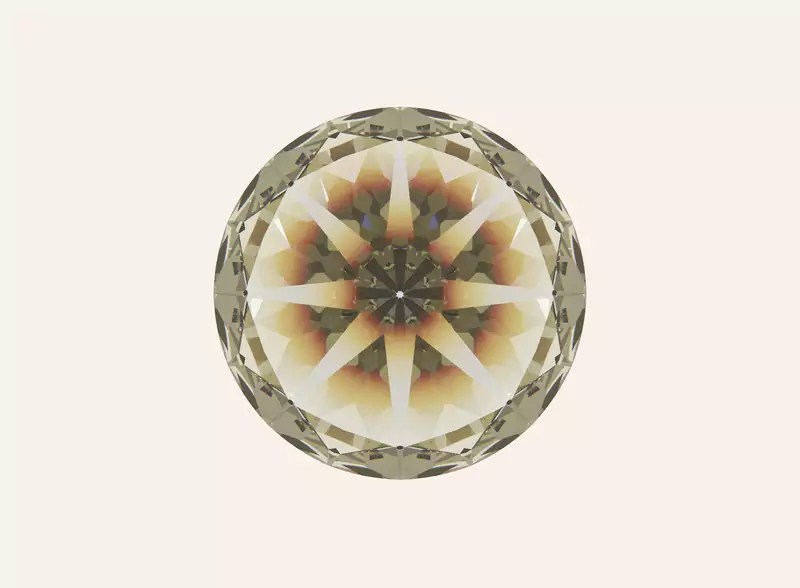 Drag to turn
Each stone turns on its own here.
Modelled illustrations from one stone's measurements, not listings.
Do ovals show more colour?
GIA's oval guide notes that ovals tend to show more colour at the tips. In this model, light travels farther inside the stone near the ends, and seen face down the oval's ends hold clearly more colour than its middle, which a round's edge does not. GIA does not say whether the tips show it face up or face down; face up, this model shows the tint mostly in the middle instead. A real stone depends on its cut, its tint and the light.
Drag to turn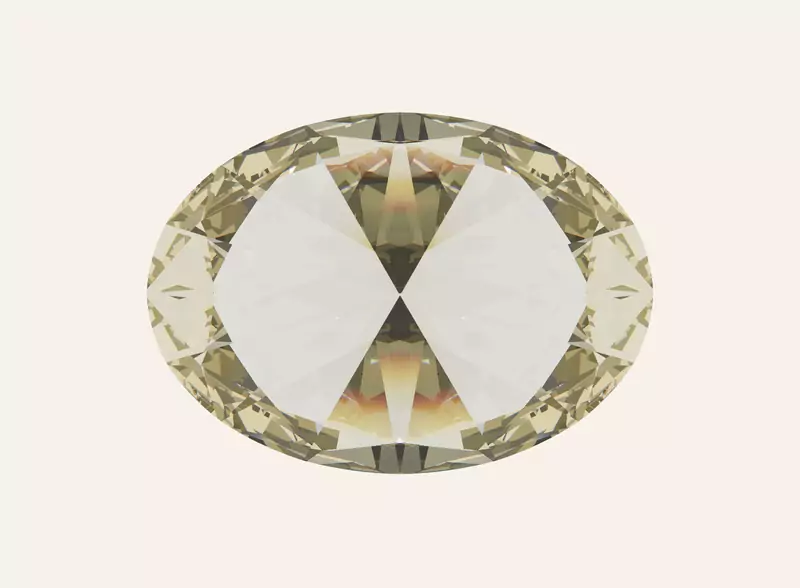 Drag to turn
What differs, in these models
Round, face down
- Shaperound
Oval, face down
- ShapeovalWatch: GIA notes that ovals tend to show more colour at the tips
Good and Watch mark whether a figure is inside or outside a range GIA or IGI publishes; where no range applies, the note describes the model only.
Drag either stone; both turn together.
Modelled illustrations from one stone's measurements, not listings.
What about brown and grey tints?
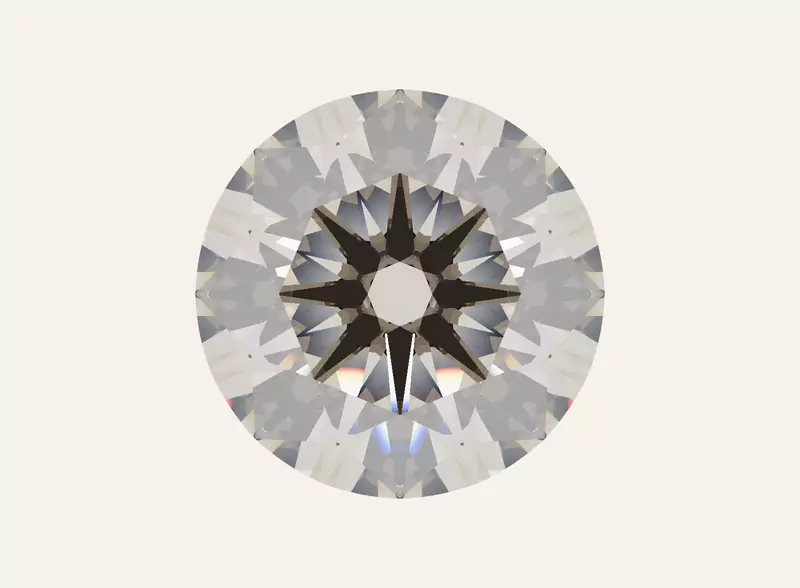
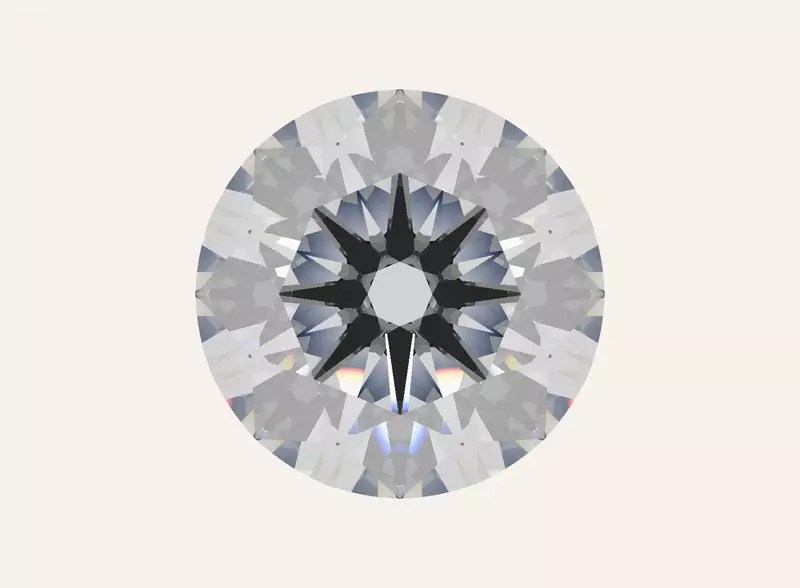
Some diamonds carry a brown or grey tint instead of yellow. In this model, brown takes more blue than red and some of every colour, so the stone looks warmer and a little darker; grey takes the same from every colour, so it only darkens the stone a little.
 Drag to turn
 Drag to turn
What differs, in these models
Brown tint
- Tint in this modelbrown
Grey tint
- Tint in this modelgrey
The model's tints are settings, not grades.
Good and Watch mark whether a figure is inside or outside a range GIA or IGI publishes; where no range applies, the note describes the model only.
Drag either stone; both turn together.
Modelled illustrations from one stone's measurements, not listings.
What to check on a listing
- Read the colour grade. A lab judges it face down in a white tray. It tells you how much colour the stone has, not exactly how it looks face up or in a setting.
- Watch the video against a plain background. A tint can be easier to judge against a plain, neutral background. For an oval or other long shape, look at the ends as well as the middle.
On Carat Hunter
Each stone's page shows the report's colour grade with a short note on what it means, and the search filters by colour grade and by shape. For an oval the page also shows its length to width ratio. The grade tells you how much colour the stone has; the video shows how it looks face up and at the tips.