Crystal inclusions in a diamond: why position matters
A crystal is a small mineral trapped inside a diamond as it formed: a small diamond, or another mineral such as garnet or olivine. GIA says the closer an inclusion is to the centre of the table, the greater its effect on the clarity grade, and the more it differs in brightness, darkness or colour from the diamond, the more visible it is. In this model, a dark crystal 0.3 mm across shows face up many times under the table and only once near the girdle.
Written by Carat Hunter, an independent diamond price comparison site that does not sell diamonds. Last checked against its sources on .
What is a crystal inclusion?
A crystal is a mineral that was trapped inside the diamond as it formed. It can be a small diamond or another mineral, such as garnet or olivine. A grading report lists it as a crystal, and a report with a plot marks where the main characteristics sit.
GIA weighs five things when it grades clarity: the size of each inclusion, how many there are, where they sit, what kind they are, and their relief, which is how much they stand out against the diamond. The models below change one of these at a time.
Does it matter where a crystal sits?
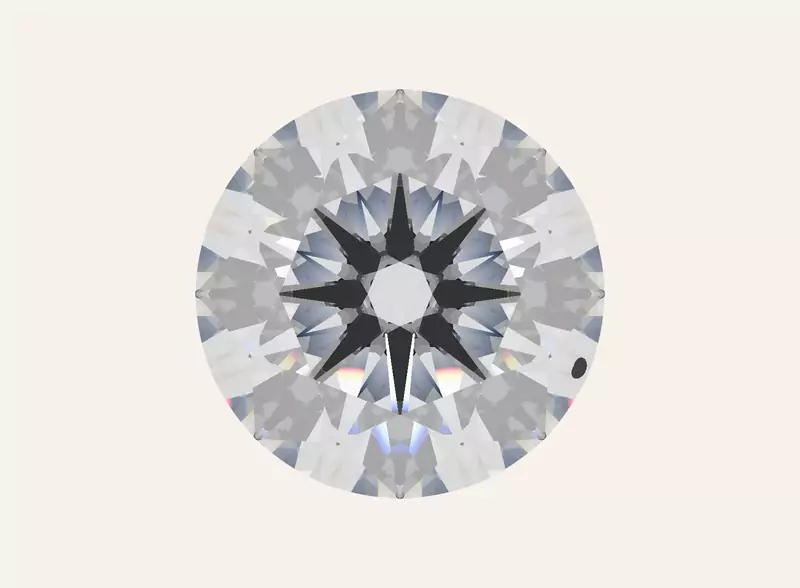
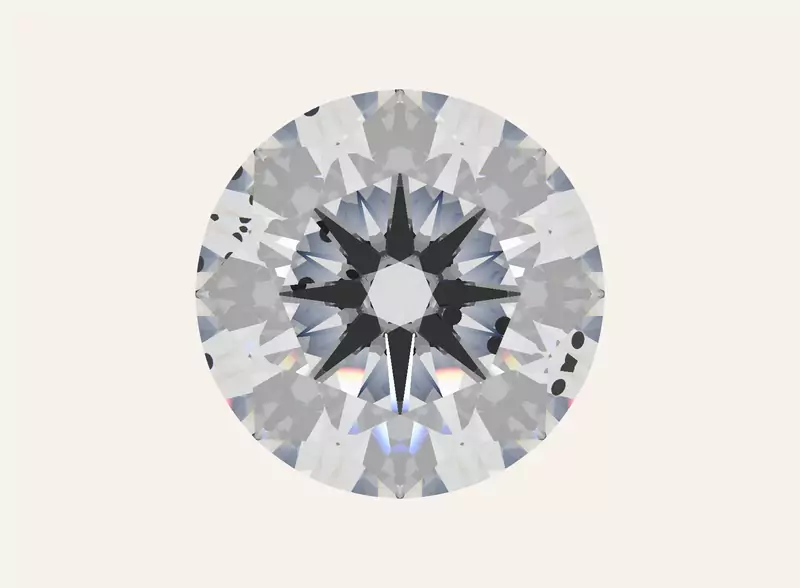
Yes. In GIA's words, "The closer an inclusion is to the centre of the table, the greater its effect on the clarity grade." Below, the same small crystal sits in the same round in two places. Under the table it is seen face up, and the facets can show it as more than one image. Near the girdle it sits under the crown facets at the edge of the stone, and in this model it shows face up only once, as a small speck at the edge. The numbers are for one modelled stone; in a real stone, the cut and the crystal change what you see.
 Drag to turn
 Drag to turn
What differs, in these models
Small crystal near the girdle
- Key to symbolscrystal
- On the plotnear the girdleGood: Shows face up only once in this model
Same crystal under the table
- Key to symbolscrystal
- On the plotunder the tableWatch: The facets can show it as more than one image, as in this model
Good and Watch mark whether a figure is inside or outside a range GIA or IGI publishes; where no range applies, the note describes the model only.
Drag either stone; both turn together.
Modelled illustrations from one stone's measurements, not listings.
Why does a dark crystal show more than a white one?
Both crystals below are the same size and in the same place, under the table. An opaque crystal stops the light that reaches it, so it and each of its reflections show as dark specks. A colourless crystal lets light through, so it differs less from the diamond, shows as a fainter speck and is easier to miss, though it still counts in the grade. How much an inclusion stands out against the diamond is what GIA calls relief.
Drag to turn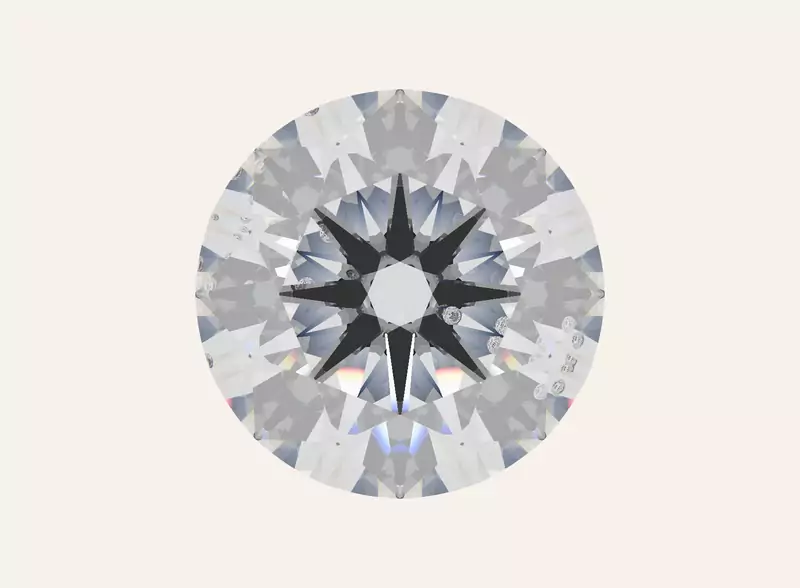 Drag to turn
What differs, in these models
Dark crystal
- Key to symbolscrystal
- On the plotunder the table
- In this modelopaque and blackWatch: In this model it and each of its reflections show as dark specks
White crystal
- Key to symbolscrystal
- On the plotunder the table
- In this modelcolourlessGood: Shows as a fainter speck and is easier to miss
Good and Watch mark whether a figure is inside or outside a range GIA or IGI publishes; where no range applies, the note describes the model only.
Drag either stone; both turn together.
Modelled illustrations from one stone's measurements, not listings.
Why does a crystal look different in each photo?
The same dark crystal under the table, rocking slowly. In this model its reflections appear, move and vanish as the stone turns, so a photo taken at one angle can show more of them, or fewer, than one taken at another.
Drag to turnWhat to check on a listing
- Read the plot. A report with a plot marks the main characteristics on a drawing of the stone. On the top view, a mark in the middle is under the table, in the crown or deeper in the pavilion; a mark at the rim sits near the girdle.
- Watch the video face up. A crystal under the table shows face up. Look for dark specks, and for a speck that repeats round the stone as it turns: one crystal can show as more than one speck.
- Where it sits, not the grade alone. The grade weighs size, number, position, kind and relief together, so two stones with the same grade can look different. A crystal near the girdle can be harder to see than one of the same size under the table, though near the girdle it can matter for the stone's strength instead.
On Carat Hunter
Where a stone's page lists the report's key to symbols, a crystal in it carries a short note on what it is. The key names what is in the stone; to see where a crystal sits, use the page's link to the lab's own page for a GIA or IGI report, where a report with a plot marks it. The video shows how it looks face up.