Feather inclusions in a diamond: when is one bad?
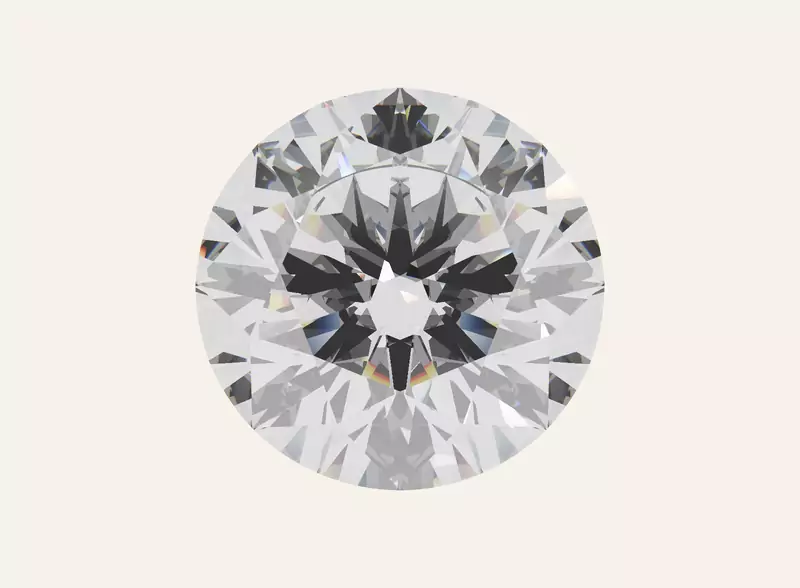
A feather is a break inside a diamond, and GIA describes it as often white and feathery in appearance. Whether it matters depends on where it sits as well as on whether you can see it: GIA notes that certain inclusions, especially near the girdle, can make a diamond more vulnerable to damage, and that a stone hit right on a feather or another inclusion that reaches the surface might chip. In this model, a feather about 1.1 mm across flashes bright with the stone tilted 10 degrees one way and nearly vanishes at 20 degrees the other way.
Written by Carat Hunter, an independent diamond price comparison site that does not sell diamonds. Last checked against its sources on .
What is a feather in a diamond?
A feather is a break, or fracture, inside the diamond, sometimes reaching the surface. GIA's guide to inclusions calls it a "general trade term for a break in a gemstone, often white and feathery in appearance." A grading report lists it as a feather.
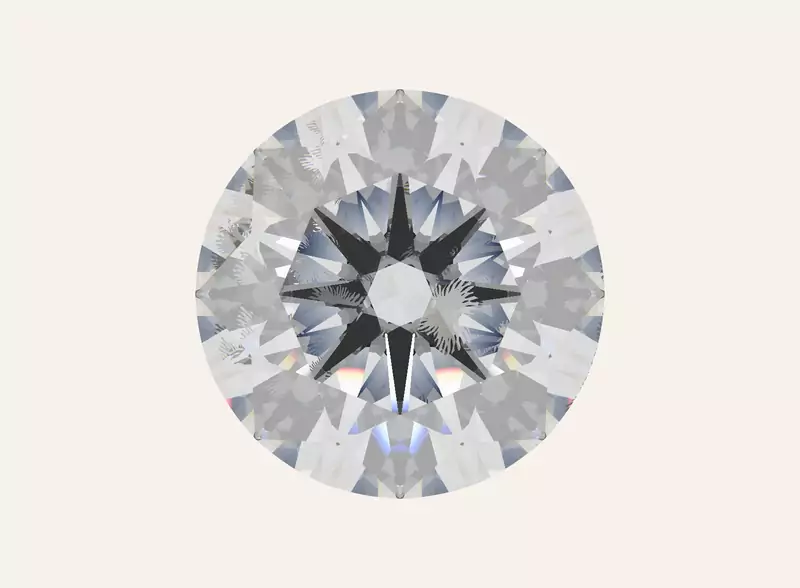 Drag to turn
Why does a feather flash and then vanish?
A feather is a thin gap inside the stone, often filled with air. Light that meets the gap at a shallow angle is reflected almost completely, as at any boundary between glass and air, so the feather can look bright; light that meets it more squarely mostly passes through, and the feather is hard to see. Below, the same modelled stone is held at two angles. The angles are for this one model; a real feather's size and openness change where it shows.
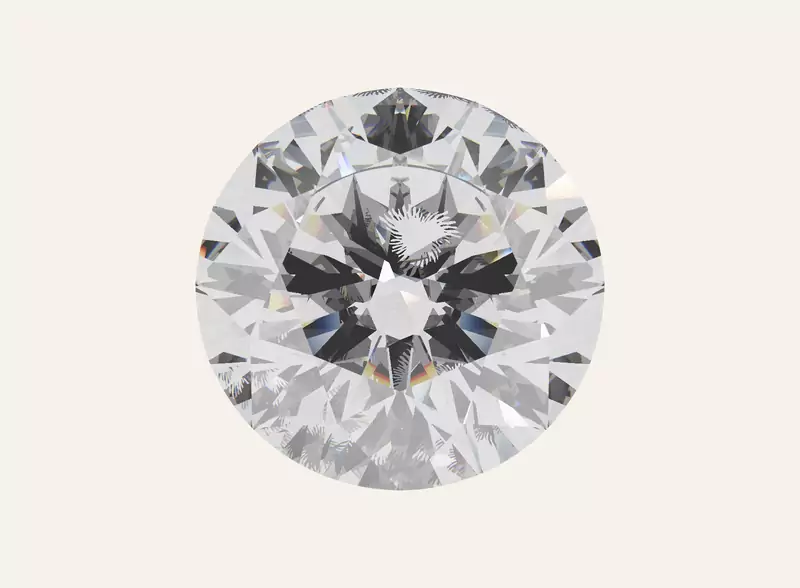 Drag to turn
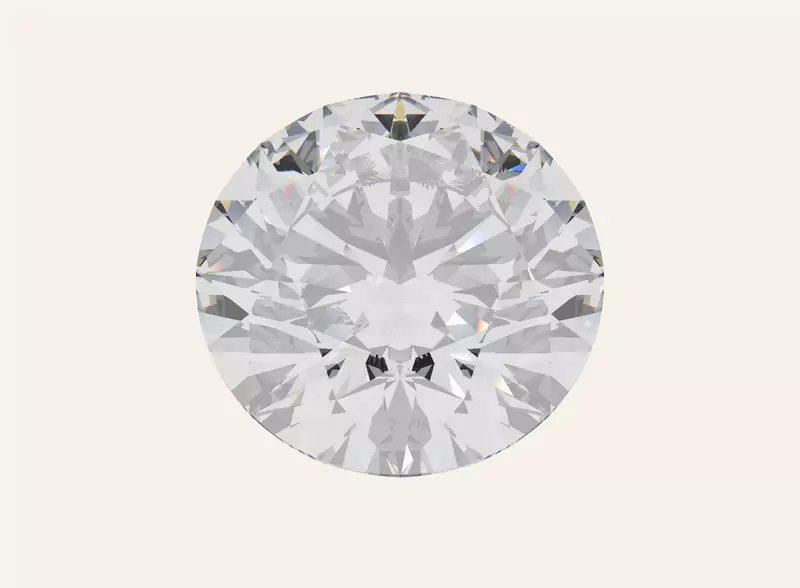 Drag to turn
Each stone turns on its own here, so you can find the angles where the feather shows.
Modelled illustrations from one stone's measurements, not listings.
Where does a feather show most?
A smaller feather, about 0.7 mm across, in two places, both held at the angle where the feather above flashes. Under the table it shows from the top. Near the girdle, standing on edge, it barely shows from the top in this model, at this angle or face up. The numbers are for one modelled stone; in a real stone, the cut and the feather change what you see.
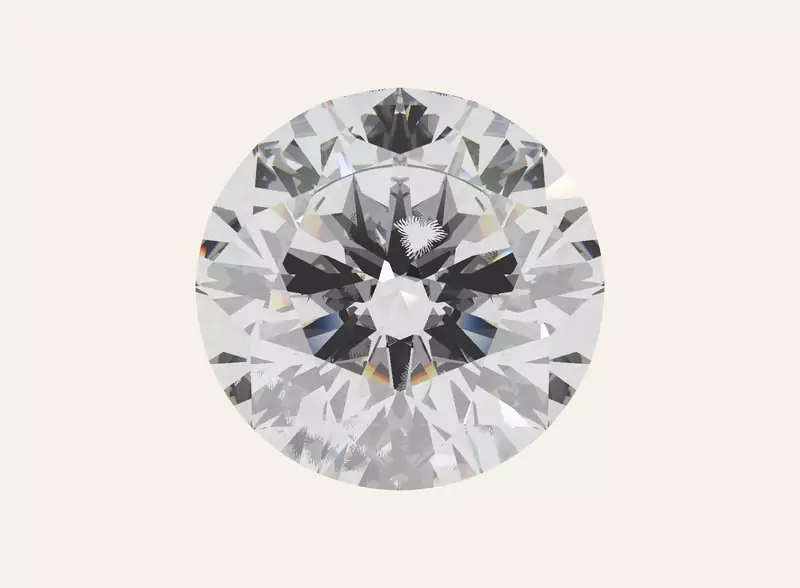 Drag to turn
 Drag to turn
What differs, in these models
Feather under the table
- Key to symbolsfeather
- On the plotunder the tableWatch: Shows from the top in this model
Same feather near the girdle
- Key to symbolsfeather
- On the plotnear the girdleWatch: GIA notes inclusions near the girdle, and feathers that reach the surface, can make a diamond more vulnerable to chipping
Good and Watch mark whether a figure is inside or outside a range GIA or IGI publishes; where no range applies, the note describes the model only.
Drag either stone; both turn together.
Modelled illustrations from one stone's measurements, not listings.
Is a feather near the girdle a risk?
It can be, even when it is hard to see. GIA notes that certain inclusions, especially near the girdle, can make a cut diamond more vulnerable to damage, so a feather there can matter for the stone's strength even if you never notice it. If the plot marks a feather at the rim, ask the seller about it, and have a jeweller look at it before the stone is set.
What if a feather reaches the surface?
A knock in the wrong place can chip the stone. GIA notes that if a stone is hit precisely on a feather or other surface-reaching inclusion, it might chip. If a feather may reach the surface, ask the seller, and have a jeweller look at it under magnification before the stone is set.
How does a grading report show a feather?
A grading report names a feather in its key to symbols, and a report with a plot marks it on the drawing of the stone. GIA's plot shows the stone from the crown and from the pavilion, with red symbols for inclusions. It does not show how deep a feather is, and it marks the main characteristics rather than every one.
What to check on a listing
- Watch the video rocking. A feather can show at one angle and not the next. Look for a pale or white patch that comes and goes as the stone turns.
- Read the plot. A feather marked at the rim sits near the girdle; one marked in the middle may be under the table, in the crown or deeper in the pavilion.
- Ask whether it reaches the surface. A feather that reaches the surface, or sits near the girdle, is worth asking the seller about, and a jeweller can look at it under magnification before it is set.
On Carat Hunter
Where a stone's page lists the report's key to symbols, a feather in it carries a short note on what it is. The page cannot tell you whether a feather sits near the girdle or reaches the surface. For a GIA or IGI report it links to the lab's own page for that report: check where the plot puts the feather, then ask the seller.