Diamond clarity grades: what they tell you, and what they miss
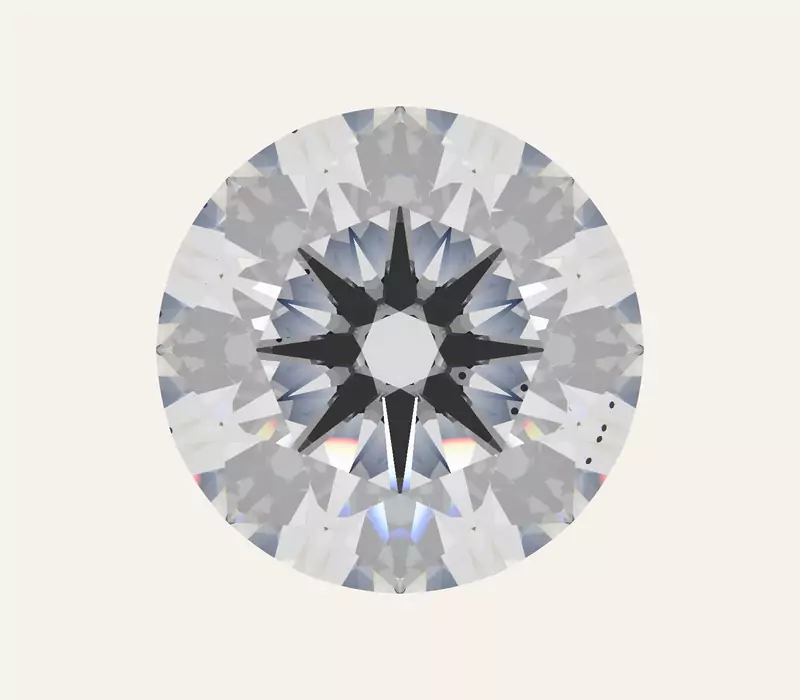
A clarity grade sums up a diamond's inclusions and blemishes as a skilled grader sees them at 10x magnification, on GIA's scale of 11 grades from Flawless to Included. The grade weighs size, number, position, kind and relief together, so it does not tell you how large an inclusion is, where it sits, or whether you will see it without magnification. In this model, one dark crystal under the table shows as tiny specks at 0.1 mm across, and clearly, repeated round the stone, at 0.4 mm.
Written by Carat Hunter, an independent diamond price comparison site that does not sell diamonds. Last checked against its sources on .
What does each GIA clarity grade mean?
GIA's clarity scale has 11 grades in six categories, all judged at 10x magnification. In GIA's own short descriptions:
- Flawless (FL)
- No inclusions and no blemishes visible.
- Internally Flawless (IF)
- No inclusions visible, but it does have blemishes.
- Very, Very Slightly Included (VVS1 and VVS2)
- Inclusions so slight they are difficult for a skilled grader to see.
- Very Slightly Included (VS1 and VS2)
- Inclusions are observed with effort, but can be characterized as minor.
- Slightly Included (SI1 and SI2)
- Inclusions are noticeable.
- Included (I1, I2 and I3)
- Inclusions are obvious, and may affect transparency, brilliance and durability.
GIA calls internal and surface-reaching characteristics inclusions, and external features blemishes.
What does a clarity grade weigh?
GIA's graders weigh five things together: the size of the inclusions, how many there are, where they sit, what kind they are, and their relief, which is how much they stand out against the diamond. Reflections count too: the facets can mirror an inclusion, which makes it easier to see. And in GIA's words, "The closer an inclusion is to the center of the table, the greater its effect on the clarity grade."
So a grade is not a size, and it is not a map. Two stones with the same grade can carry quite different inclusions. For what each inclusion is and where it sits, read the report's plot and key to symbols, then watch the video.
What do crystals, feathers and clouds look like?
Each kind has its own guide, with modeled stones that show where it sits and how it looks face up:
- Crystals and where they sitA mineral trapped inside the stone: why one under the table shows more than one near the girdle, and a dark one more than a white one.
- FeathersA break inside the stone that can flash white at one angle and nearly vanish at the next, and when one near the girdle or at the surface matters.
- Clouds and pinpointsMany pinpoints close together: when a cloud stays out of sight face up, when it makes a stone look hazy, and what a report comment about clouds not shown means.
How does an inclusion's size change what you see?
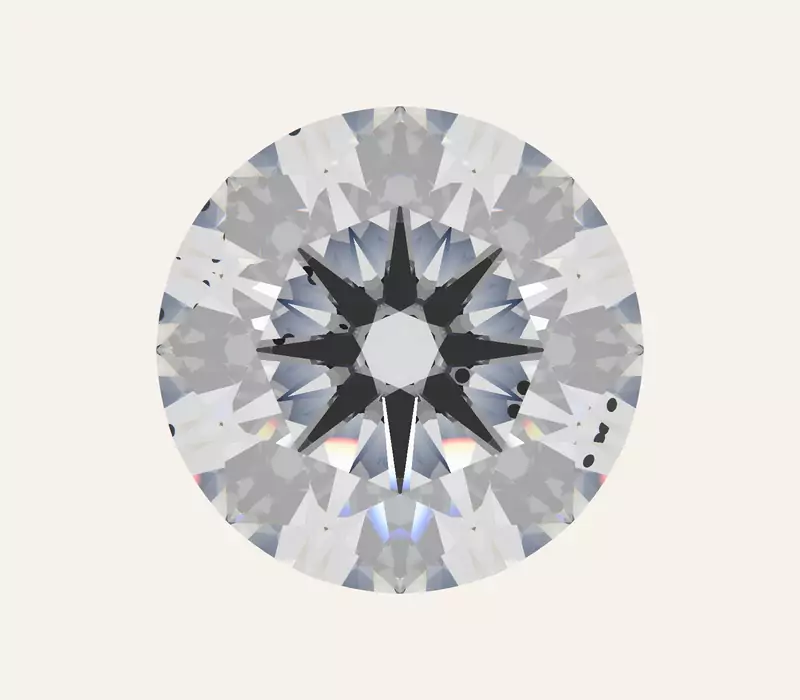
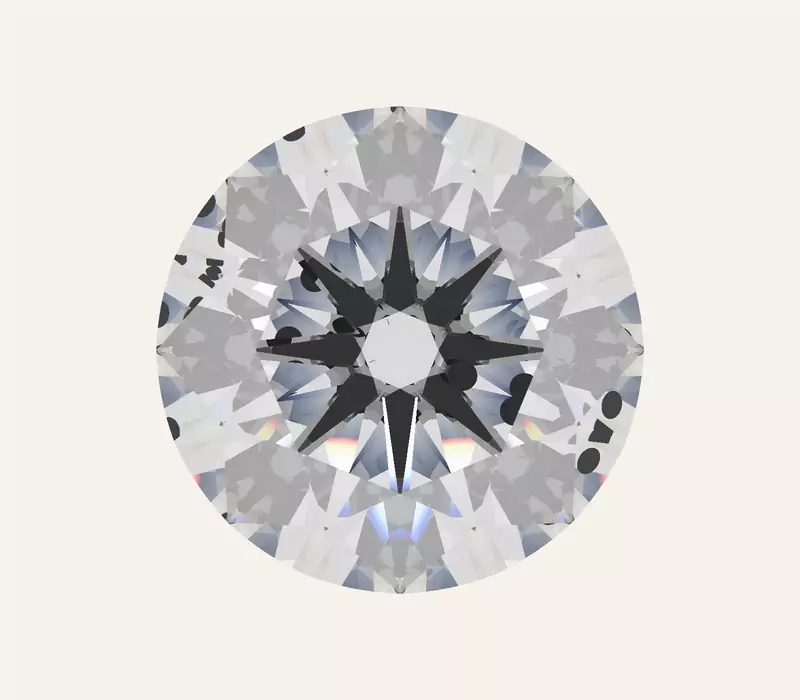
The same modeled round three times, each with one dark crystal under the table: 0.1, 0.2 and 0.4 mm across in this model. Face up, the larger the crystal, the more of the stone it darkens, and the facets repeat it as more specks. The models have no grades: they change the size alone, while a real grade weighs all five things together.
 Drag to turn
 Drag to turn
 Drag to turn
What differs, in these models
Crystal 0.1 mm across
- Key to symbolscrystal
- On the plotunder the table
- Size in this model0.1 mm
Crystal 0.2 mm across
- Key to symbolscrystal
- On the plotunder the table
- Size in this model0.2 mm
Crystal 0.4 mm across
- Key to symbolscrystal
- On the plotunder the table
- Size in this model0.4 mm
These models have no grades.
Good and Watch mark whether a figure is inside or outside a range GIA or IGI publishes; where no range applies, the note describes the model only.
Drag any stone; all three turn together.
Modeled illustrations from one stone's measurements, not listings.
Can two diamonds with the same clarity grade look different?
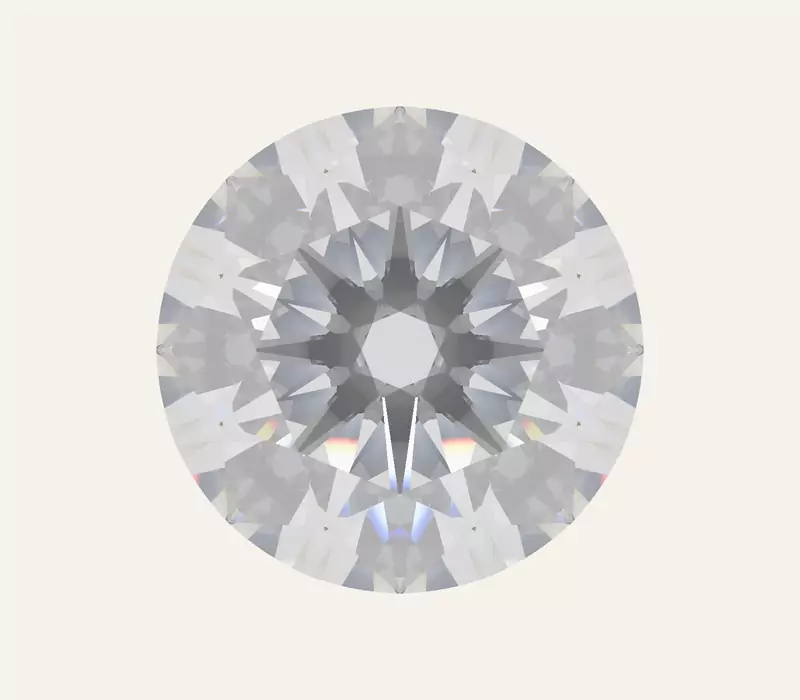
Yes. Because a grade weighs size, number, position, kind and relief together, two stones with the same grade can carry quite different inclusions and look different. Below, the same modeled round carries a different inclusion each time. The models are not graded, and nothing here says they would share a grade: they show how differently inclusions can look face up.
Drag to turn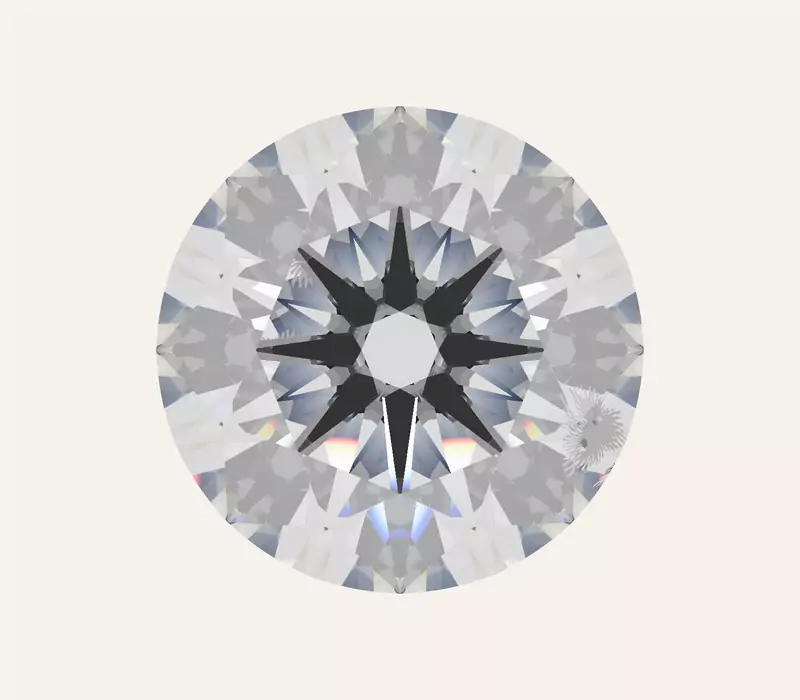 Drag to turn
 Drag to turn
What differs, in these models
A small dark crystal under the table
- Key to symbolscrystal
- On the plotunder the table
A feather near the girdle
- Key to symbolsfeather
- On the plotnear the girdle
A faint cloud under the table
- Key to symbolscloud
- On the plotunder the table
The models are not graded.
Good and Watch mark whether a figure is inside or outside a range GIA or IGI publishes; where no range applies, the note describes the model only.
Drag any stone; all three turn together.
Modeled illustrations from one stone's measurements, not listings.
Is eye-clean a GIA grade?
No. Eye-clean is a trade term for a diamond whose inclusions cannot be seen without magnification. GIA does not use the term, so it is not a grade on a GIA report. GIA notes that clarity characteristics may be more visible in some cuts than others. Whether you see an inclusion without magnification also depends on the inclusion and on how you look: the light, the angle and how close you hold the stone.
The models on this page are magnified: the scale bar under each one shows a length in mm, and the stone is drawn much larger than life. They cannot show what your eye sees at arm's length, so use them to compare inclusions, not to judge whether a stone is eye-clean.
What to check on a listing
- Read the plot and the key to symbols. A report with a plot marks the main characteristics on a drawing of the stone, and its key to symbols names them. Note what they are and where they sit, not only the grade.
- Watch the video face up and turning. Look for dark specks, white or pale patches and haze. Some inclusions show at one angle and not the next.
- Treat eye-clean as a claim to check. It is not a GIA grade. If a listing calls a stone eye-clean, check the video, and ask in what light and from how far it was judged.
On Carat Hunter
A stone's page shows its clarity grade with a short note on what the grade means, and the search filters by clarity grade. Where the report's key to symbols is known, the page lists it, and each term, such as crystal, feather or cloud, carries a short note. Some stone pages also show an eye-clean line. It does not come from the grading report, so read it as a guide and check the video.