Oval outlines: flat and bulging shoulders
An oval's outline is its shape seen face up, traced around its girdle. GIA's guide to ovals says to watch out for flat or bulging shoulders, which can make an oval look slightly marquise-shaped or slightly pill-shaped, and to look for ends that are evenly curved. In this model, ovals of the same 9.70 by 6.93 mm weigh about 1.91 ct with bulging shoulders and about 1.70 ct with flat ones.
Written by Carat Hunter, an independent diamond price comparison site that does not sell diamonds. Last checked against its sources on .
What are an oval's shoulders?
The shoulders are the curved areas that connect each end of an oval to its belly. A grading report gives an oval's length and width, which fix its length to width ratio, but not the curve between them, and the plot's outline only approximates the shape.
GIA does not grade cut on ovals, and IGI's guidelines for an Excellent oval set no outline requirement. Which outline you like is partly taste: in GIA's 2024 study, observers varied widely on which outlines they found acceptable, and most oval outlines were slightly broader at the shoulders than an ellipse.
Balanced, bulging and flat shoulders
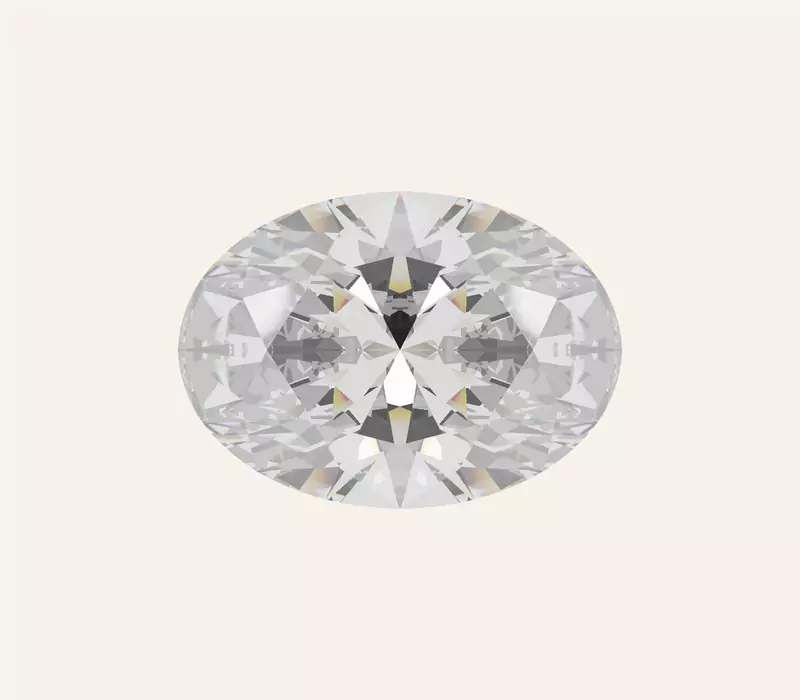
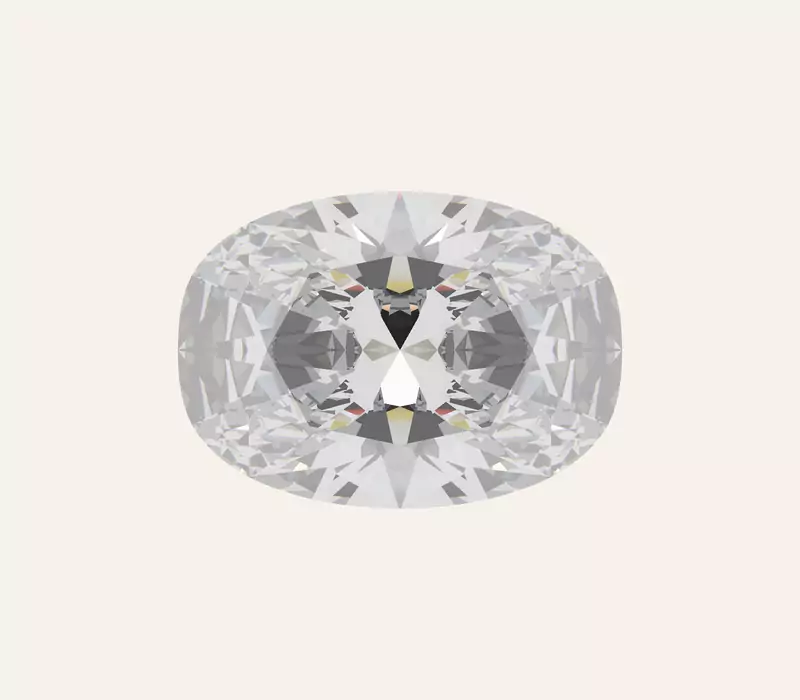
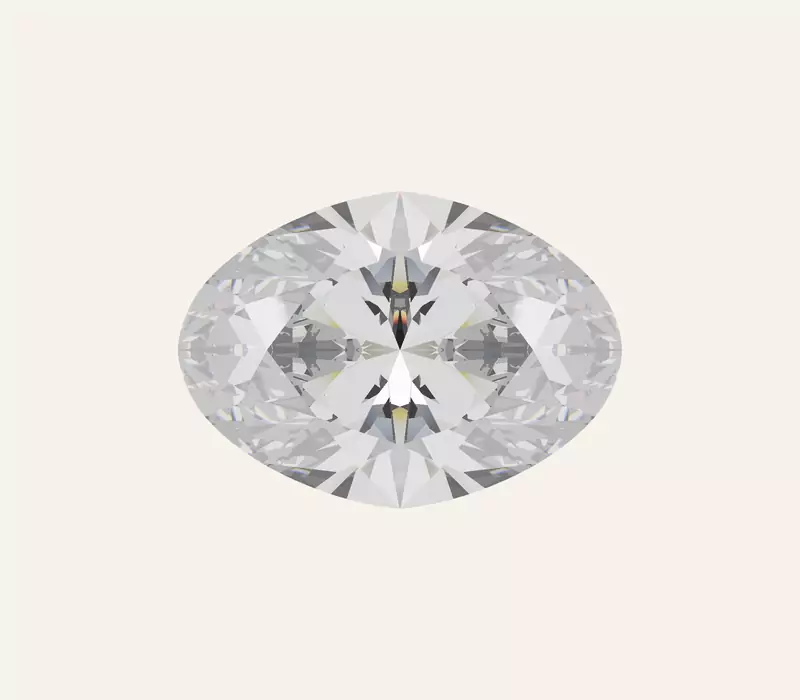
The same length and width three times, each one shape of many: a balanced outline, then shoulders kept full and then shoulders flattened.
 Drag to turn
 Drag to turn
 Drag to turn
What differs, in these models
Balanced outline
- Measurements9.70 × 6.93 mm
- Weightabout 1.80 ct
Bulging shoulders
- Measurements9.70 × 6.93 mm
- Weightabout 1.91 ct
Flat shoulders
- Measurements9.70 × 6.93 mm
- Weightabout 1.70 ct
In this model, the same length and width give different weights, so the carat weight alone does not tell you how the outline looks.
Good and Watch mark whether a figure is inside or outside a range GIA or IGI publishes; where no range applies, the note describes the model only.
Drag any stone; all three turn together.
Modeled illustrations from one stone's measurements, not listings.
Can two ovals of the same size weigh different amounts?
In this model, yes. At 9.70 by 6.93 mm, the balanced oval weighs about 1.80 ct, the one with bulging shoulders about 1.91 ct and the one with flat shoulders about 1.70 ct. So the carat weight alone does not tell you how the outline looks.
What to check on a listing
- Look at the outline face up. In the photo or video, compare the curve at the shoulders and the ends, not only the length to width ratio.
- Read the length and width. They fix the ratio, not the outline, so two stones with the same figures can look different.
- Check that the two halves match. GIA's guide to ovals says the shape and faceting of the two halves should mirror each other, and that the ends should appear evenly curved.
On Carat Hunter
An oval's page shows its length, width and length to width ratio, and draws a standard oval at that ratio. Lucy's take says whether the ratio is classic, long or short among the ovals we track. Neither the figures nor the drawing shows the stone's own shoulders; for those, look at the photo or video.