Thin and thick diamond girdles: what the report words mean
The girdle is the narrow band that separates a diamond's crown from its pavilion and serves as its setting edge. GIA describes its thickness in eight words, from Extremely Thin to Extremely Thick, and notes that a thin girdle can increase the risk of chipping while a thick one can make a diamond heavier than it looks face up. In this model, a 6.50 mm round weighs about 1.04 ct with a medium girdle and about 1.16 ct with a very thick one.
Written by Carat Hunter, an independent diamond price comparison site that does not sell diamonds. Last checked against its sources on .
What is a diamond's girdle?
GIA describes the girdle as a narrow section separating the crown from the pavilion, which functions as the diamond's setting edge. On a round brilliant it is scalloped: thicker at 16 points GIA calls hills, and thinner at 16 valleys between them, where the upper and lower half facets come closest to meeting.
GIA's graders judge the thickness in profile at 10x magnification, looking at the 16 valleys and their thickness compared with the stone's diameter. A report uses eight words, thinnest first, here with GIA's typical valley thickness for each word that has one, as a share of the diameter:
- Extremely Thin
- Very Thin
- Thin: about 1.2%
- Medium: about 1.8%
- Slightly Thick: about 2.5%
- Thick: about 3.5%
- Very Thick: about 5.0%
- Extremely Thick: about 7.5%
GIA gives these figures as typical values for comparison, not as boundaries, and gives none for Extremely Thin or Very Thin.
When the thinnest and thickest valleys fall in the same category, the report gives one word, such as Very Thin; more often it gives a range from the thinnest to the thickest, such as Very Thin to Medium.
A report can also describe the girdle's surface as bruted, polished or faceted. GIA judges the thickness the same way whichever it is.
Three girdles in profile
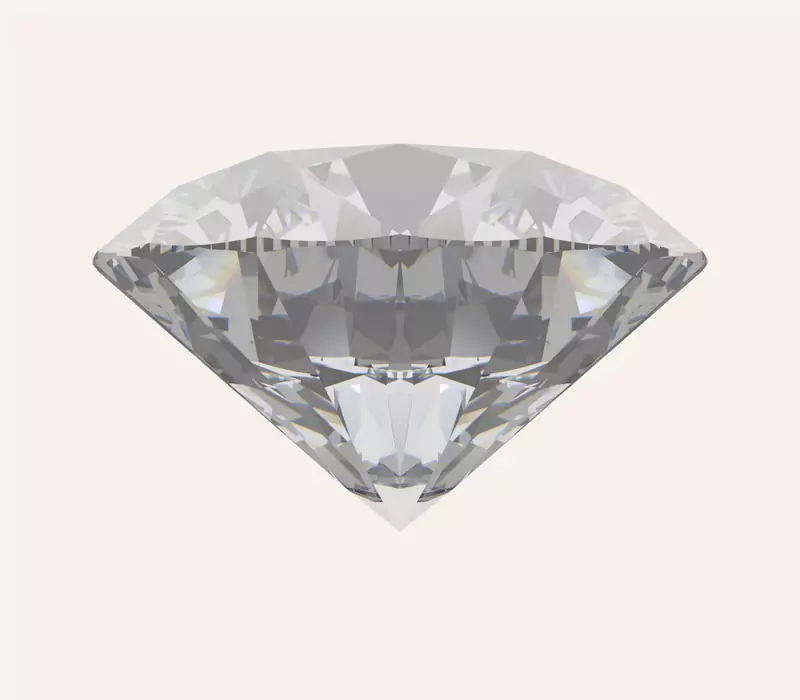
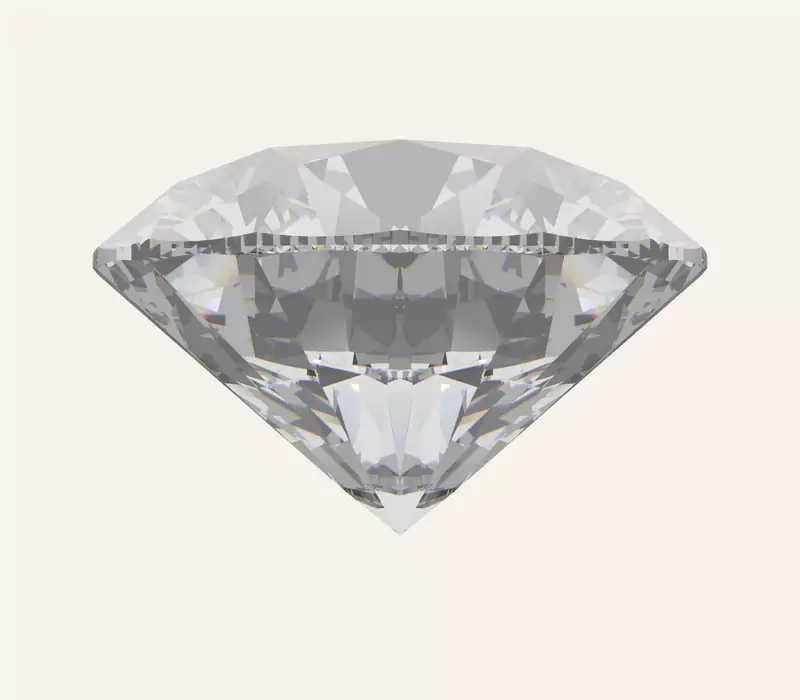
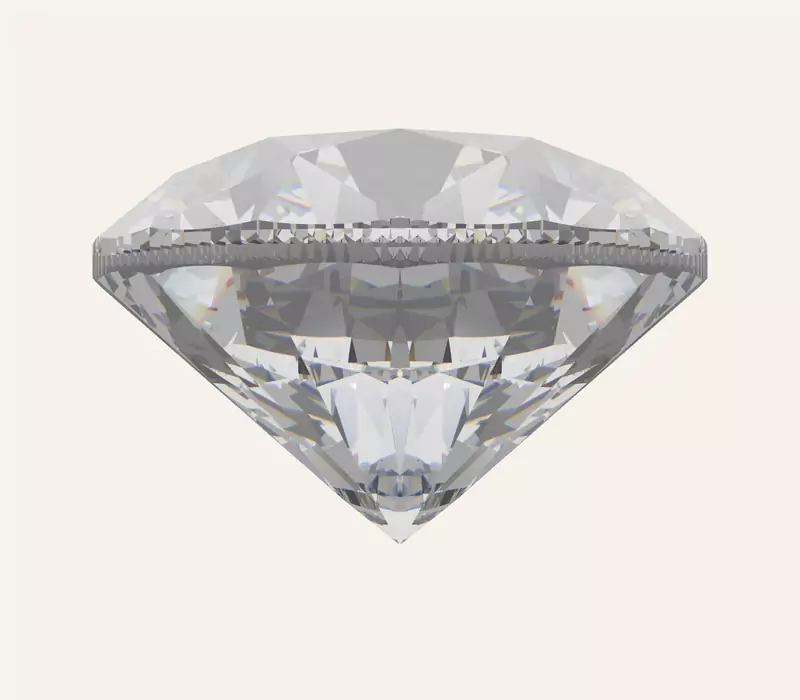
The same modeled round, 6.5 mm across, seen side on with three girdles; only the girdle changes. The medium and very thick models use GIA's typical valley figures for those words, about 1.8% and 5.0% of the diameter. GIA gives no figure for very thin, so that model sits between a knife-edge and GIA's typical thin girdle. Every figure here is this model's, not a limit for real stones.
 Drag to turn
 Drag to turn
 Drag to turn
What differs, in these models
Very thin girdle
- Girdlevery thinWatch: GIA notes very thin girdles pose a greater risk of damage
Medium girdle
- Girdlemedium
Very thick girdle
- Girdlevery thickWatch: GIA notes a thick girdle can make a diamond heavier than its face-up appearance warrants
Good and Watch mark whether a figure is inside or outside a range GIA or IGI publishes; where no range applies, the note describes the model only.
Drag any stone; all three turn together.
Modeled illustrations from one stone's measurements, not listings.
What are knife-edge and extremely thick girdles?
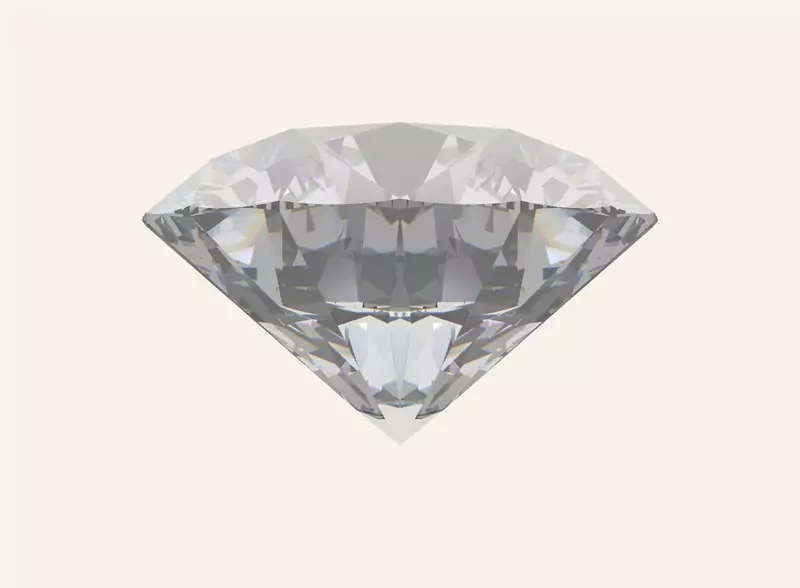
GIA describes an extremely thin girdle as one where the crown and pavilion meet with no girdle in between, creating a sharp edge that may be called a knife-edge. If an extra facet, a chip or a natural narrows the girdle to a knife-edge in one place, the thickness is reported as Extremely Thin; a chip that breaks through onto the crown and pavilion is not counted in the girdle thickness. At the other end, the extremely thick model uses GIA's typical valley figure for that word, about 7.5% of the diameter.
 Drag to turn
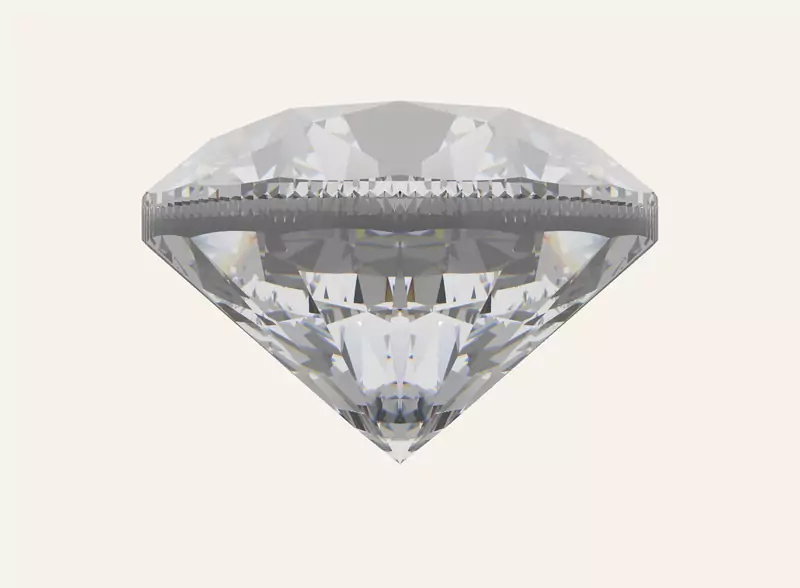 Drag to turn
What differs, in these models
Extremely thin girdle: a knife-edge
- Girdleextremely thinWatch: A knife-edge: GIA notes these pose a greater risk of damage
Extremely thick girdle
- Girdleextremely thickWatch: GIA notes a thick girdle can make a diamond heavier than its face-up appearance warrants
Good and Watch mark whether a figure is inside or outside a range GIA or IGI publishes; where no range applies, the note describes the model only.
Drag either stone; both turn together.
Modeled illustrations from one stone's measurements, not listings.
Is a very thin girdle a problem?
GIA notes that a thin girdle can increase the risk of damage such as chipping, and that very thin girdles, sometimes called knife-edge girdles, pose a greater risk of damage.
The setting can help. GIA says a bezel setting, a thin metal strip pushed or hammered around the stone, protects the girdle against knocks and mishaps, and that six prongs might give the girdle a little extra protection in daily wear compared with four.
Shapes with points or sharp corners, such as pears, marquises and princesses, are ones GIA notes are more vulnerable to chipping. The next section shows the point of a modeled pear.
Points and sharp corners
A modeled pear's point, close up and seen from the side, level with the girdle: once with a very thin girdle and once with a medium one. GIA's girdle thickness words and figures are defined at the valleys of a round brilliant's girdle, so on the pear's point they serve only as a comparison. The girdle at the point is the short edge between the crown above and the pavilion below; in this model the thinner girdle leaves a sharper point. The figures are for one modeled stone, 6.00 mm wide.
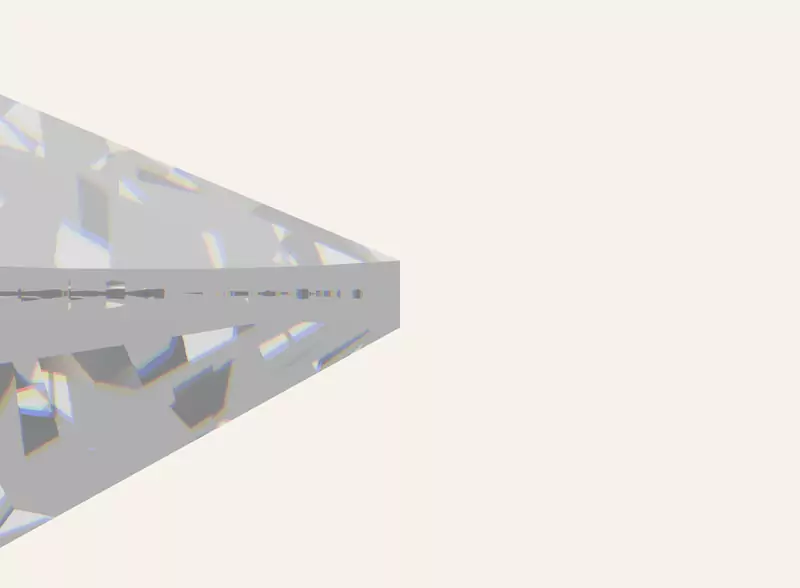 Drag to turn
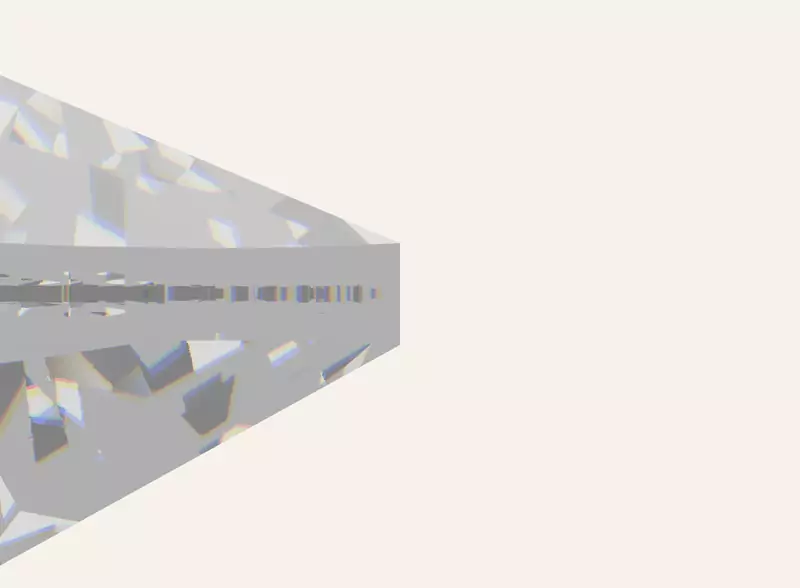 Drag to turn
What differs, in these models
Pear with a very thin girdle
- Girdlevery thinWatch: GIA notes very thin girdles pose a greater risk of damage
Pear with a medium girdle
- Girdlemedium
Good and Watch mark whether a figure is inside or outside a range GIA or IGI publishes; where no range applies, the note describes the model only.
Drag either stone; both turn together.
Modeled illustrations from one stone's measurements, not listings.
Does a very thick girdle hide weight?
GIA notes that a thick girdle can make a diamond heavier than its face-up appearance warrants. A carat is a weight, not a size, so weight in the girdle adds carats without adding to the face-up size. In these models, the very thick round at 6.50 mm weighs about 1.16 ct against 1.04 ct for the medium one. At the same weight, about 1.04 ct, the very thick round is 6.27 mm across against 6.50 mm.
Two rounds of the same weight, from above and drawn to the same scale: Hidden weight and spread
What to check on a listing
- Read the girdle line. It gives one word or a range, such as Thin to Medium. A range that reaches Very Thin or Extremely Thin, or Very Thick or Extremely Thick, is worth a closer look.
- With a very thin girdle, choose the setting with care. A bezel protects the girdle. Ask a jeweler to look at the girdle under magnification before the stone is set.
- With a very thick girdle, compare the measurements. Length and width tell you how large a stone faces up. Compare them with other stones of the same weight.
On Carat Hunter
A stone's page shows the girdle as the report gives it, such as Medium to Slightly Thick, and, where it is known, the girdle's surface (faceted, polished or bruted) with a short note. Lucy's take on a stone can point out a girdle that runs very thin or very thick, or, for a fancy shape IGI covers, one outside IGI's Excellent range.