Hidden weight: why one round faces up smaller
In the trade, a diamond's spread means how large it looks face up for its carat weight, and two diamonds of the same weight can spread very differently. Weight held in a thick girdle or a deep pavilion adds carats but not width; GIA notes that a poorly cut diamond may be too deep and have weight hidden below the girdle. In this model, two rounds of about 1.04 ct face up at 6.50 mm and 6.20 mm across, and the smaller one has a very thick girdle and a 43.5 degree pavilion, 69.0% deep.
Written by Carat Hunter, an independent diamond price comparison site that does not sell diamonds. Last checked against its sources on .
What does a round with good spread look like?
This round is modeled at about 1.04 ct and 6.50 mm across, with a medium girdle and a pavilion angle of 40.8 degrees.
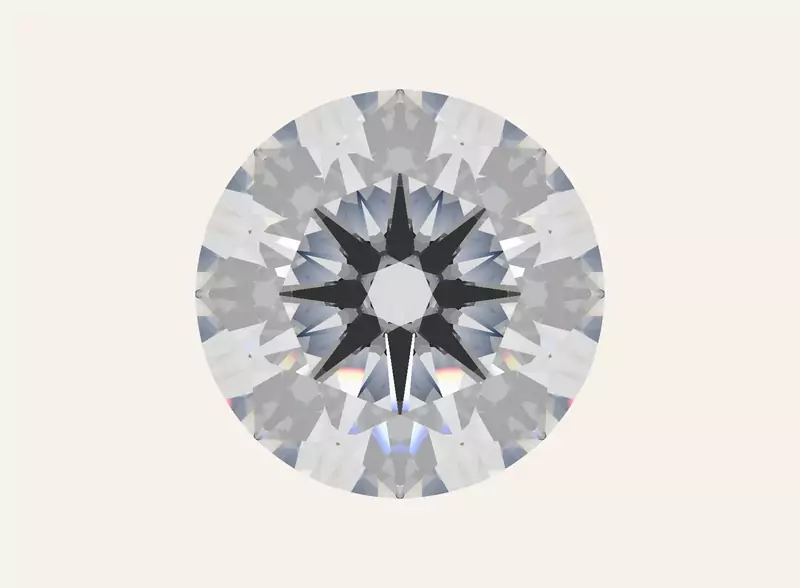 Drag to turn
This model's figures
- Weightabout 1.04 ct
- Face-up diameter6.50 mmGood: Faces up larger for its weight in this model
- Pavilion angle40.8°
- Table56%
- Depth61.9%
- Girdlemedium
- Culetpointed
Good and Watch mark whether a figure is inside or outside a range GIA or IGI publishes; where no range applies, the note describes the model only.
Same weight, different spread
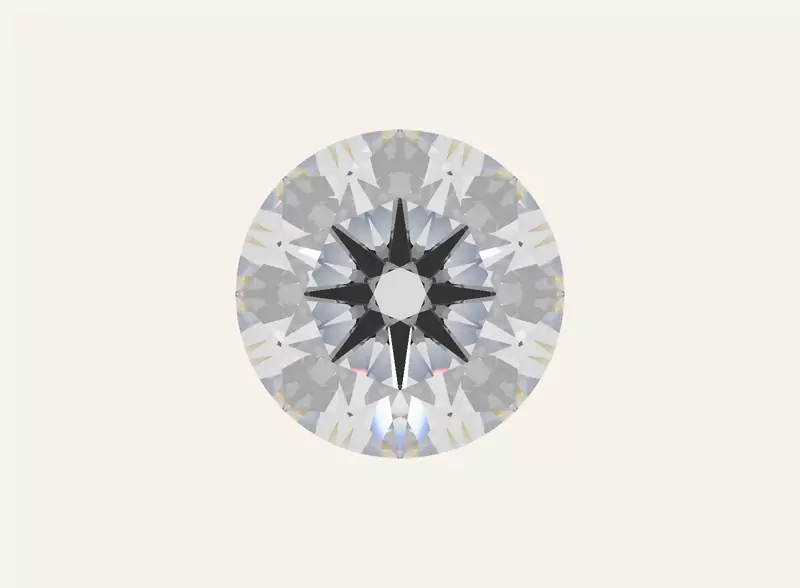
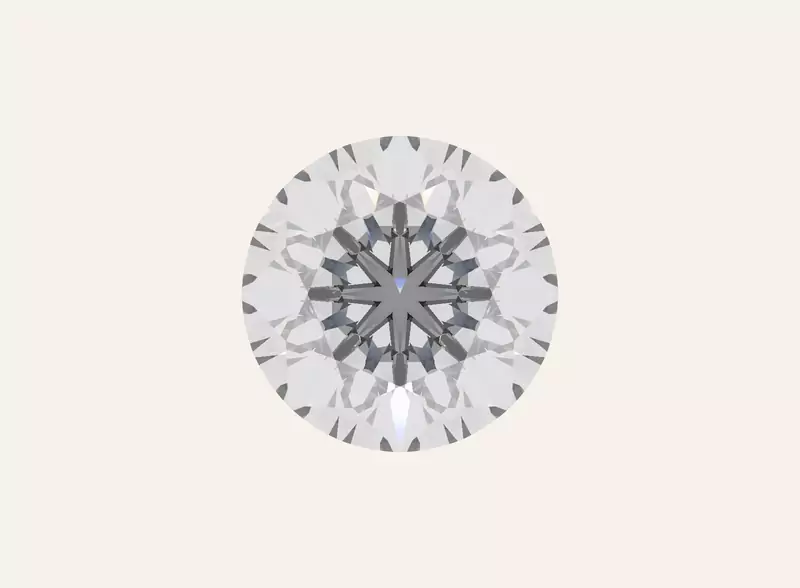
Two rounds of the same modeled weight, about 1.04 ct, from above and to the same scale.
 Drag to turn
 Drag to turn
What differs, in these models
Good: faces up larger
- Weightabout 1.04 ct
- Face-up diameter6.50 mmGood: Faces up larger for its weight in this model
- Girdlemedium
- Depth61.9%
Poor: weight hidden
- Weightabout 1.04 ct
- Face-up diameter6.20 mmWatch: Faces up smaller for the same weight in this model
- Girdlevery thickWatch: A very thick girdle adds weight that does not show face up
- Depth69.0%
Good and Watch mark whether a figure is inside or outside a range GIA or IGI publishes; where no range applies, the note describes the model only.
Drag either stone; both turn together.
Modeled illustrations from one stone's measurements, not listings.
Where does hidden weight go?
A carat is a weight, not a size. Weight in a thick girdle and a deep pavilion sits below and around the face of the stone, so it faces up smaller than a well-proportioned stone of the same weight. In the girdle guide's models, the very thick girdle alone does this: at the same weight that round is 6.27 mm across. The smaller round here also has a deeper pavilion, so in this model it faces up smaller still, at 6.20 mm.
Does a grading report show spread?
Not as one figure. A report gives the carat weight and the measurements in millimeters, so you can compare the two. For a standard round, GIA's cut grade also looks at weight ratio. GIA's booklet on estimating a cut grade describes it as a comparison of a diamond's weight to its diameter, and says a diamond can have too much or too little weight for its diameter; the girdle counts when its thickness adds a substantial increase in weight.
What to check on a listing
- Compare millimeters, not only carats. Length and width tell you how large a stone faces up. Compare them between stones of the same weight.
- Depth. A round that is deep for its width carries weight below the girdle.
- Girdle. A thick or very thick girdle adds weight at the edge of the stone that does not show face up.
- Size for its weight. Lucy's take says when a stone faces up larger or smaller than most of the same weight.
To see how a size in millimeters looks on a finger, at true scale: Diamond size on your hand
On Carat Hunter
A stone's page shows its carat weight with its measurements in millimeters right under it, so you can compare face-up size between stones of the same weight. Lucy's take can say when a stone faces up larger or smaller than most stones of its shape and weight that we track, and when its girdle runs very thick.
Sources
- GIA 4Cs: Diamond Carat Weight
- GIA 4Cs: Diamond Cut
- GIA 4Cs: Understanding Carat Weight: GIA Diamond Grading Reports
- GIA, Gems & Gemology, Fall 2004: A Foundation for Grading the Overall Cut Quality of Round Brilliant Cut Diamonds (Moses et al.)
- GIA: Estimating a Cut Grade Using the GIA Diamond Cut Grading System
- GIA: How to Read a GIA Diamond Grading Report (2026)